
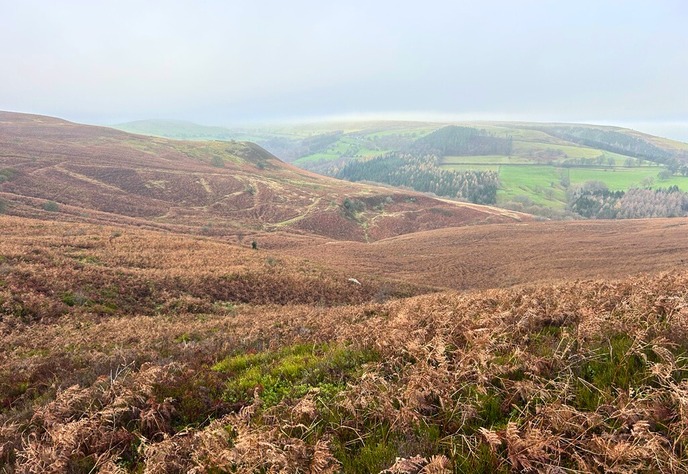
Landmark donation of Eyam Moor is the latest example of landowners helping to transform Britain’s uplands.
A 600-acre stretch of Peak District moorland has been donated to a wildlife charity in a landmark deal that will see the land protected and restored for nature.
Derbyshire Wildlife Trust has secured Eyam Moor, near the historic village of Eyam, in the largest single land acquisition in the trust’s history.
The land has been gifted by its former owners, who wish to remain anonymous, to ensure that it is managed for wildlife in perpetuity.
The acquisition will enable the charity to restore and reconnect upland heathland, woodland and wetland habitats, creating a more diverse landscape while helping to tackle climate change, improve water quality and strengthen resilience to flooding.
It will also help establish a connected wildlife corridor covering more than 1,000 acres, linking Eyam Moor with neighbouring land already managed for nature.
The moor forms part of the charity’s Wild Peak project, which aims to restore nature across the Peak District through landscape-scale conservation and partnerships with landowners and local communities.
The donation represents a significant contribution towards the trust’s ambition of restoring 100,000 acres for nature across Derbyshire by 2030.
It also follows the charity’s acquisition of Middleton Moor earlier this year, demonstrating growing support for restoring the county’s upland landscapes.
Eyam Moor will become the trust’s fourth Biodiversity Net Gain site, potentially providing funding for long-term restoration through payments from developers required under the Environment Act to deliver a 10% uplift in biodiversity.
The acquisition is the latest in a growing number of transfers of upland estates into conservation-focused ownership and management.
Across Britain, environmental charities, public bodies, private individuals, companies and community organisations are increasingly acquiring degraded areas of moorland with the intention of restoring them to nature-rich habitats and landscapes.
Recent examples include the acquisition of Emblehope Moor in Northumberland by environmental restoration company Restore and the community-led purchase of more than 10,000 acres of former grouse moor at Langholm in southern Scotland, now managed as the Tarras Valley Nature Reserve.
Although such acquisitions still account for a relatively small proportion of Britain’s uplands, they reflect changing societal attitudes towards the value of these landscapes, particularly their potential to support biodiversity, store carbon and provide wider environmental benefits, such as flood mitigation and improved water quality.
The ecological recovery of the Eyam Moor will take time, but its long-term protection has already been secured.
As similar initiatives gather pace elsewhere, Eyam Moor could also become another example of how Britain’s uplands are gradually being transformed, acre by acre, for nature, climate and people.
Image credit: Derbyshire Wildlife Trust