The Government has unveiled its first comprehensive strategy for managing England’s public estate for nature, bringing together more than 557,000 hectares of land under a single framework designed to restore wildlife, strengthen climate resilience and support essential public services.
The Government Estate Nature Plan, published by Minister for Nature Mary Creagh CBE MP, marks a shift away from what she described as “fragmented, site-by-site efforts” towards a coordinated approach to managing public land across Government departments and agencies.
Covering an area equivalent to around four per cent of England, the plan commits the national government to managing public land more strategically to restore habitats, improve biodiversity, enhance water quality, expand woodland cover and contribute towards the UK’s target of protecting 30 per cent of land and sea for nature by 2030.
Among the landscapes included are some of England’s most important upland habitats, encompassing blanket bogs, ancient grasslands and hay meadows, clough woodlands, heathlands and rivers.
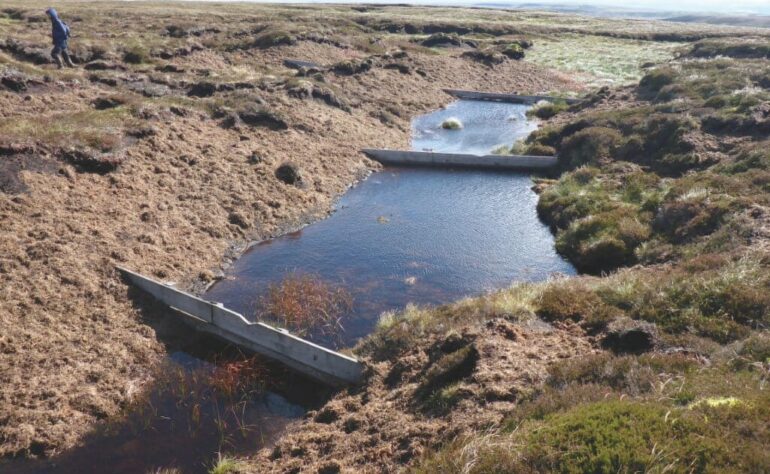
Projects covered by the plan include the restoration of degraded blanket bogs and rare arctic-alpine habitats at Natural England’s Moor House – Upper Teesdale National Nature Reserve, peatland recovery across the Ministry of Defence’s training areas at Warcop in Cumbria and Otterburn in Northumberland, and the continued landscape-scale restoration of Ennerdale in the Lake District, where more than 100,000 native trees have been planted alongside natural regeneration and river, mire and wetland restoration.
The plan forms part of the wider National Estate for Nature programme, a coalition of 26 major landowners responsible for around ten per cent of England’s land, including Government departments, public bodies, utility companies, the National Trust, the Crown Estate, the Duchies of Lancaster and Cornwall and the RSPB.
Responding to the publication, Wild Moors welcomed both the plan and its ambition.
“The recognition that public land should be managed as a connected ecological network rather than as isolated sites is an important step forward,” a spokesperson said. “England’s uplands are among our most valuable landscapes for carbon storage, biodiversity and water security. Managing them at landscape scale offers significant benefits for nature, climate resilience and the communities that depend upon them.”
The organisation said the inclusion of extensive upland estates demonstrated the growing recognition of the role that healthy peatlands, native woodlands and restored moorland habitats can play in meeting national environmental targets while continuing to support the public services delivered from those landscapes.
Image: peatland restoration at Warcop Training Area in Cumbria (Credit: North Pennines National Landscape / MoD)